My new leadership hero is a woman by the name of Ema Roloff. I am not sure how I came across Ema – I think she popped up on my LinkedIn feed – but she’s doing a great job of saying some of the quiet parts out loud regarding AI, “transformation,” and why people are so damned tired of talking about change that they don’t want to talk about it any more. If you aren’t following her on LinkedIn or Instagram, definitely go smash that “follow” button today.
What I love about what Ema’s saying is that it’s what a lot of us have been hearing from clients for a long time, or talking about in late-afternoon one-to-one calls with our colleagues, or whispering about in hallways outside of meetings. Namely, people are sick to death of change for change’s sake. We’ve moved way beyond the idea of “change is the only constant,” and are now in a space where constant change has burned people all the way out. Between having six different SAAS products we have to use on a daily basis just to do our jobs:

An image of a meme about using SAAS products at work.
And constant reorganizations:
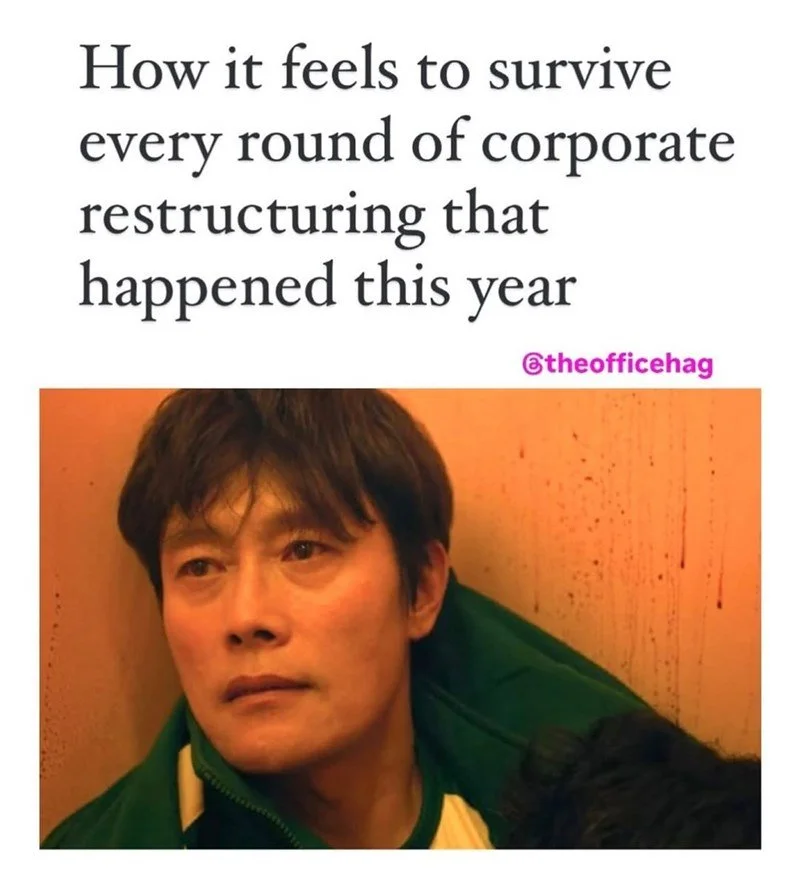
A meme about surviving corporate reorganizations.
And now the constant tone-deaf pushes about using AI for any reason or no reason:
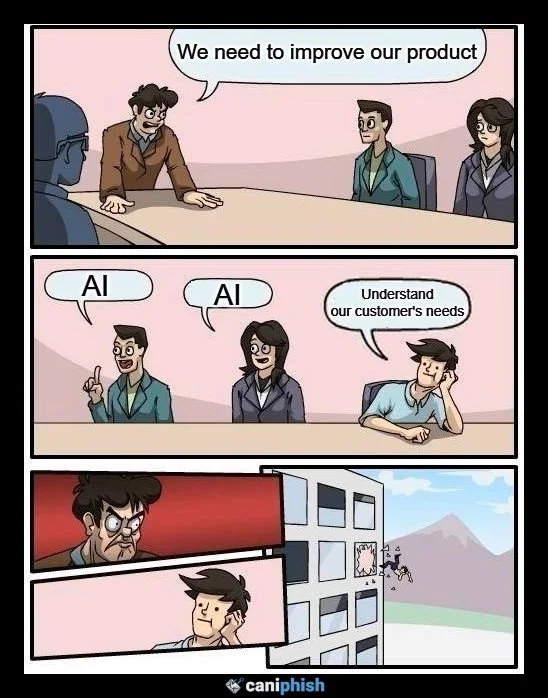
A meme about using AI instead of understanding the customer’s needs.
There are a lot of employees who are have adopted a modus operandi of “I’m going to keep my head down, do whatever I have to in order to get through today, and worry about tomorrow later.” Full-on survival mode. And not much of any real value happens when people are in survival mode.
I’ve read a lot of theories about how and why we got here. Maybe it was the proliferation of bullshit jobs. Maybe constant change is what passes for strategy these days. Maybe people are just bored, and this is how they are choosing to entertain themselves.
In any case, the current fatigue people are exhibiting about AI – which, for many of us, just seems like the latest in a long line of shiny objects people are chasing – is very real, and it’s creating stagnation, confusion, and dissatisfaction in organizations. If you’re a leader who’s wondering why your people can’t seem to get excited about AI (or why they’re always giggling about the latest AI-related meme that got posted on Slack), consider the following:
Think about the last three change initiatives that got rolled out to your workforce. How many of them were successful, in that the change endured and people really are doing things differently than they did them before? How much do people remember about the big communication push you did, or the town halls you held, or the painstakingly-developed mandatory trainings you put people through? Are there still cartons of swag (stress balls; t-shirts; water bottles) left over from that big push that are gathering dust in a stockroom somewhere? Failed change initiatives have a cumulative effect on morale, and willingness to entertain yet another attempt at sweeping change that the employees know (even if you don’t) isn’t really going anywhere.
Why do you want people to use AI to do their jobs? What’s in it for them? Why shouldn’t they feel threatened or apprehensive about using a technology that has been touted as a replacement for employees? Also: what really happens if people don’t use it? And please be honest with yourself. Is it that your company really will fall measurably behind competitors? (Corollary question: do your customers really want these AI features, or AI agents, you’re forcing them to interface with?) Is it possible YOU have fallen for some hype, or fallen victim to FOMO, when it comes to AI?
Finally: realize that it takes courage and fortitude to realize when you, or your leadership team, may have fallen into FOMO-driven decisions, or engaged in groupthink. Listening is hard, but it’s necessary. When you see resistance, rather than getting cranky about it and figuring out how to push back, do some listening. And really think about what people have to say. They may have some points you genuinely had not considered.
I’m not scared of AI – I am using it more or less daily to complete certain tasks. But I have lived a little too long to think it’s going to be the cure-all for business problems that have been plaguing mankind since the beginning of recorded history: namely, that it can eliminate all tedious, repetitive tasks, or that it can replace the human ingenuity that has carried us from Stone Age times to the present day. I am also pretty resistant to having AI “features” shoved down my throat, and it seems like most people I talk to feel the same way. (If you doubt this, go look at Ema’s Instagram and read some of the comments on her posts.)
The core of all successful change management comes down to: What’s in it for me? So if you want your employees and customers to adopt AI, you better figure out the answer to that question before you start changing things. “Everyone is doing it” is not a good answer. Nor is “You have to do this because I told you so.” If those responses are core to your “AI strategy,” you’re going to fail. It’s never too late to start listening, and pivot to real strategies that will produce meaningful, durable results.